


Explore the Summit Highlights
September 17
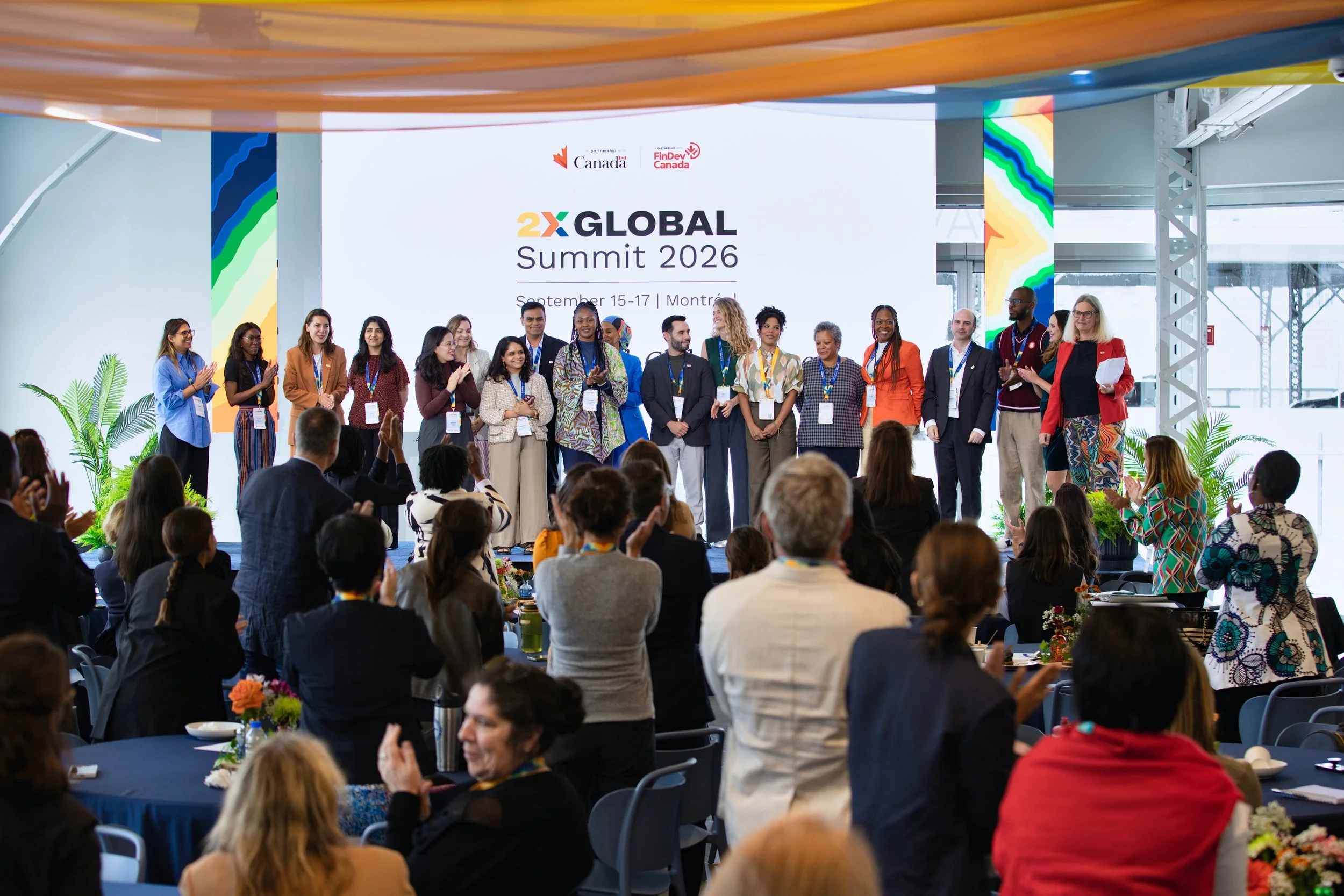
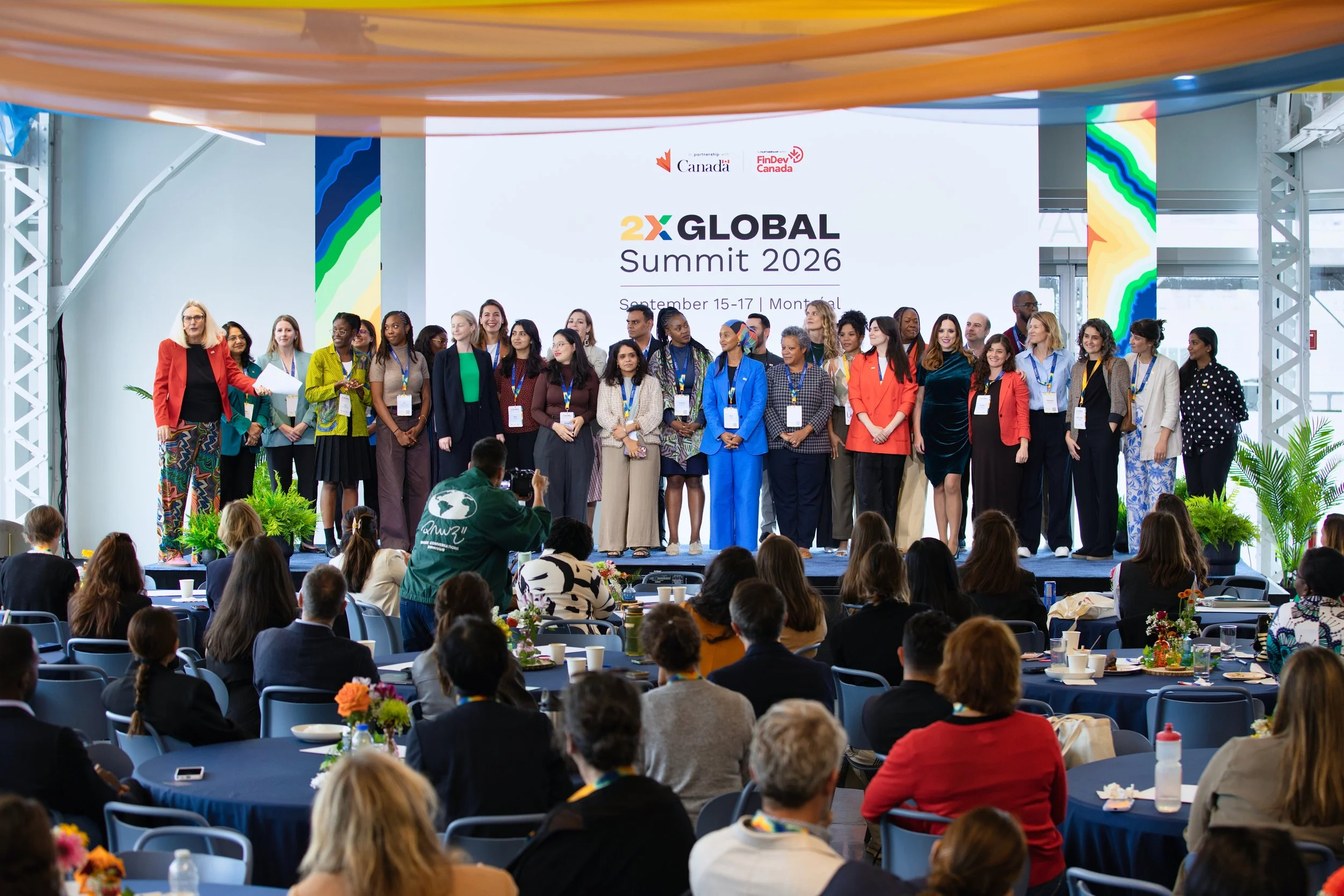
The 2X Global Summit is the annual convening of 2X Global members and strategic partners, aimed at fostering member connections, driving collaborations, and advancing meaningful actions to close the global gender financing gap.
This year's summit, co-hosted with FinDev Canada and Global Affairs Canada, takes place in Montréal, Canada, from 15–17 September 2026.
This year's theme is ´Grounded Capital. Global Partners.´ It speaks to capital that stays rooted in local realities and to the partnerships that carry it further.
On this page, you can explore the highlights from Day 2 of the Summit. Scroll down to dive into the ideas, conversations, and solutions shaping the future of gender-smart investing.
Grounded in action
Member-led sessions and the closing as they unfolded.
Insights from Working Sessions & Closing Day
Member-led working sessions where the network moved from conversation to practice, sharing what's working across gender lens investing and deepening engagement across the 2X Global community.
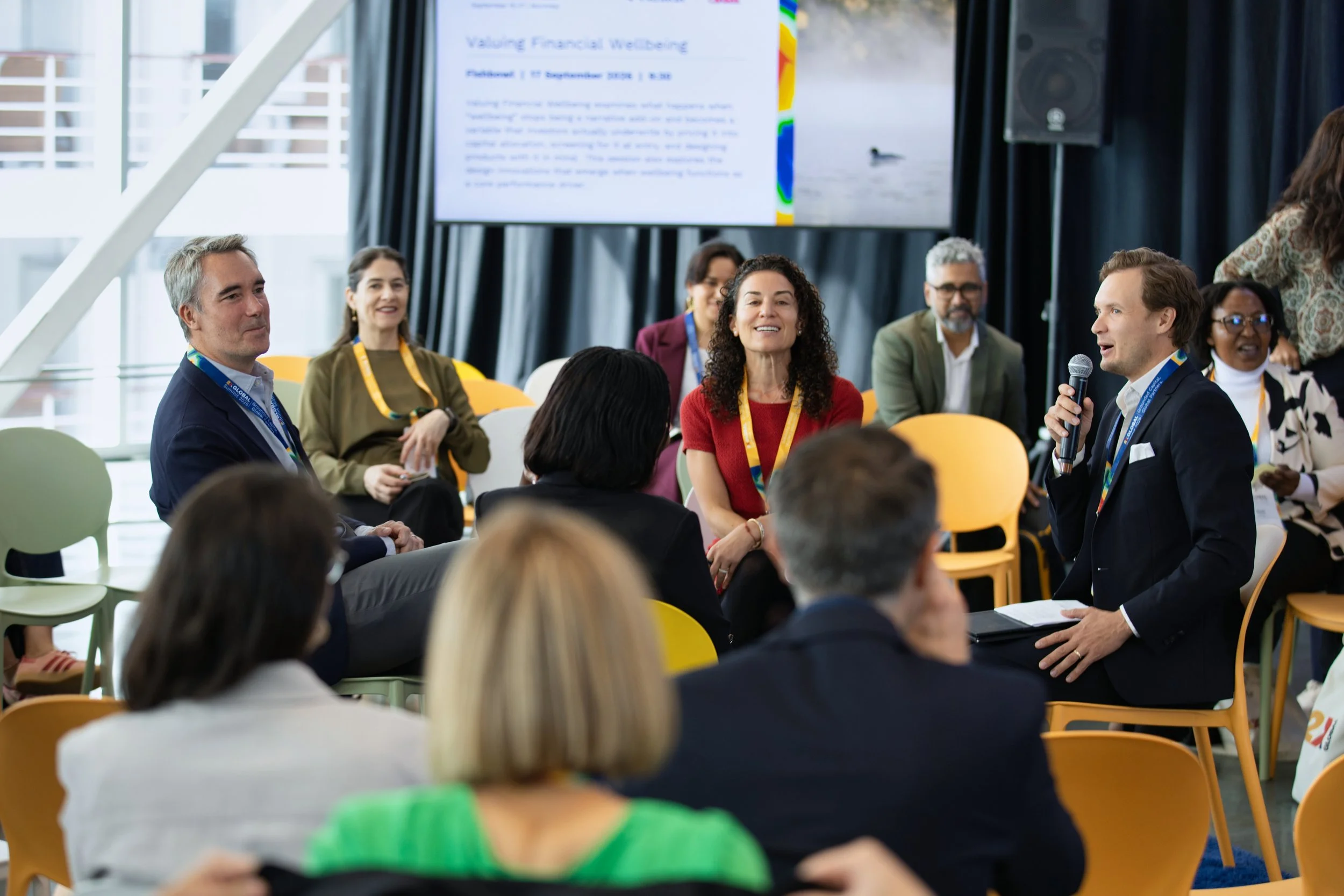
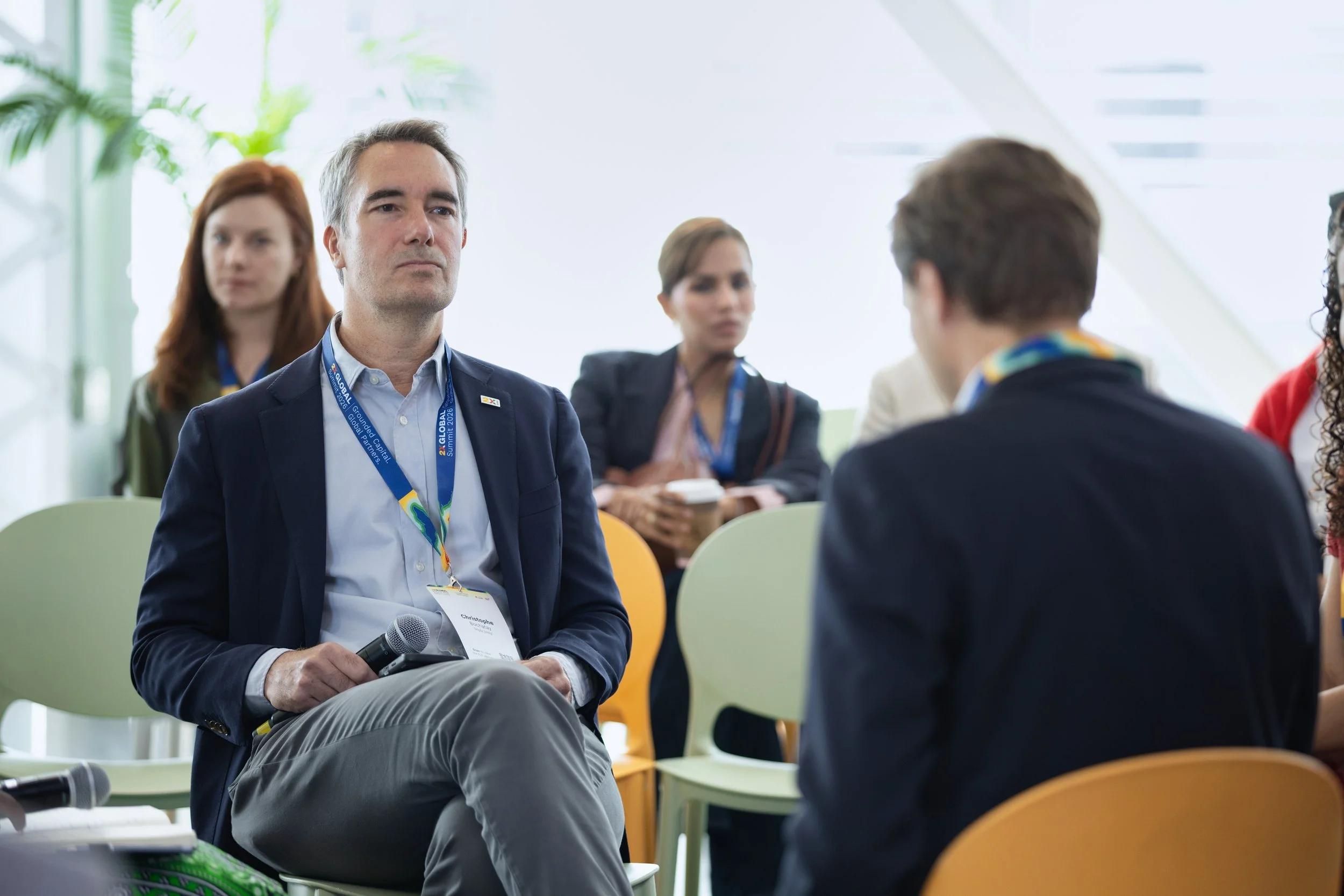
Fishbowl | Valuing Financial Well-being
The session explored financial well-being from several angles: the agency financial access gives women, the role investors play in supporting it, and the central importance of data.
KEY INSIGHTS
Balancing standardised data with cultural context: collecting both qualitative and quantitative data is central to understanding customers’ financial well-being. While there was broad agreement on the value of standardising this data, wide variation in cultural contexts makes standardisation difficult in practice.
Financial access is a starting point, not an endpoint: access is the beginning of a pathway towards women’s financial well-being, and moving from access to well-being may require better product design. One example raised: structuring loans for women farmers around their crops’ cash-flow cycles, rather than rigid repayment schedules.
Q&A
What responsibility do impact investors bear in addressing predatory lending, given they often serve the same customer base as predatory actors?
The room pointed to ongoing efforts to strengthen consumer protection, and to the need to raise awareness about entities that present themselves as MFIs but do not act in customers’ best interests.
FROM THE ROOM
In defining financial well-being: “The difference between being rich and being wealthy is that rich is what you see, and wealth is what you don’t see. I work with my clients to help them develop wealth, because this is what enables them to live a good life.”
TOOLS AND RESOURCES
The Poverty Stoplight: a self-assessment tool used in Paraguay that lets individuals track their own financial well-being journey. Rather than measuring poverty as a fixed status, it captures the pace of progress out of poverty.
Amundi has been adapting the 2X criteria for listed companies.
Choosing asset managers who factor in diversity is essential to advancing on this issue.
A challenge: designing a product that is accessible to as many investors as possible.
Q&A
What is the biggest challenge for gender lens investing in public markets?
Data and reporting. Without data, it is almost impossible to build solid strategies.
How could we convince investment committees to apply the 2X criteria?
It is an education journey: asking questions and showing successful case studies.
What is needed to bring in more asset managers?
Mainstream the arguments by positioning gender diversity as an economic driver, and draw on financial influencers.
FROM THE ROOM
“The starting point is always the investment mandate. That is why we need to engage closely with pension funds to ensure a gender lens is embedded from the outset.”
Panel | Investing in Future Generations
Intersectional investing does not require a complex new strategy: it enhances an existing gender lens by intentionally considering other affected groups such as children, youth or persons with disabilities, uncovering risks and opportunities a single lens might miss.
KEY INSIGHTS
Intersectionality is a way to improve investment decisions, not a separate layer of complexity.
Lenses such as gender or children are complementary rather than competing.
Better due diligence reveals commercial value: examining end-user needs can uncover risks and opportunities.
FROM THE ROOM
“Commercial opportunity, risk and impact sit on the same spectrum.”
TOOLS AND RESOURCES
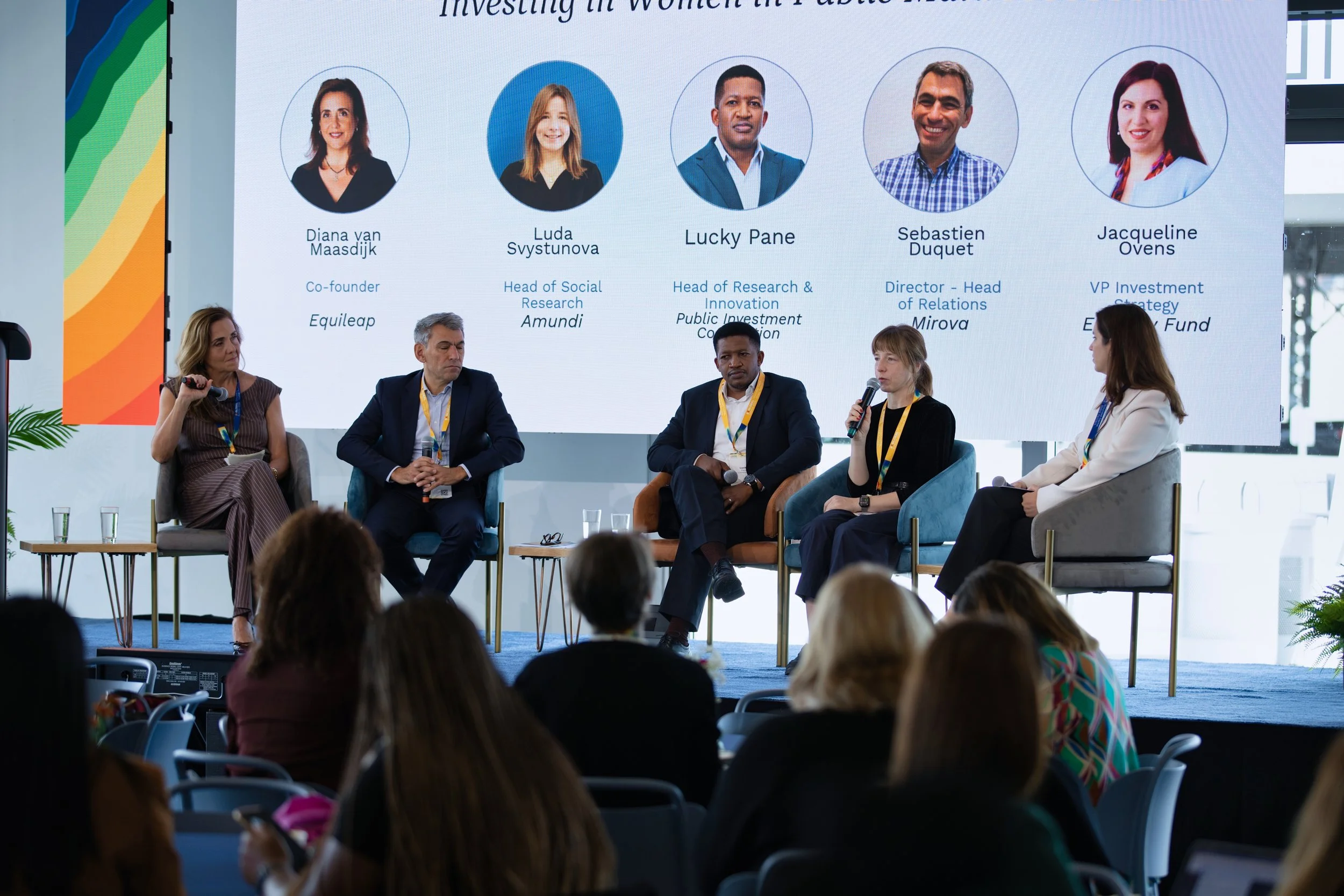
Panel | Investing in Women: Public Markets
95% of the world’s $283 trillion in investable capital sits in public markets, which remain largely untapped by gender lens investing.
KEY INSIGHTS
The latest Global Asset Monitor puts global investable capital at $283 trillion. Nearly $270 trillion sits in public markets, compared with $14.9 trillion in private markets. The market where gender lens investing has gained much of its traction represents just 5% of the world’s investable capital; the other 95% remains largely untapped.
Fishbowl | Elevating Women’s Voices in AI
Inclusive AI requires women and underrepresented communities to shape the technology, data, capital and governance from the outset, rather than only responding to its impacts after deployment.
KEY INSIGHTS
Representation gaps are embedded across the AI ecosystem: speakers cited that around 90% of Wikipedia authors and around 60% of active Reddit users are male, while women represent only 14% of AI engineers, which shapes both the data AI learns from and who builds it.
Catalytic capital can address who AI gets built for: commercial capital tends to optimise for the largest, most immediately profitable markets, so catalytic capital can fund the additional cost of developing solutions for women, indigenous communities, rural populations and other underserved groups until commercial viability is demonstrated.
The underlying issue is power, not only bias: discussion moved beyond representation to who owns AI companies, models, data and infrastructure. Examples included community-owned data centres, open-source models, peer-to-peer computing, and investing deeply in smaller communities rather than assuming scale automatically equals impact.
Q&A
Could greater use of AI by women itself improve representation, and how can organisations move from concern to action?
Responses emphasised actively creating and contributing data and knowledge, increasing women’s participation as builders and decision-makers, and combining responsible adoption with stronger governance, ownership and funding models.
FROM THE ROOM
“This is a human problem, not a technical problem.”
TOOLS AND RESOURCES
Abundant Intelligences: community-led research exploring how AI can align with Indigenous knowledge systems.
Predistribution Initiative: highlighted for work on worker and community ownership and power in AI-related companies and infrastructure.
Panel | Lessons from Canada’s Gender-smart Leadership
Canada’s experience shows that gender lens investing moves from promising pilots to mainstream practice when clear public leadership is reinforced by partnerships, shared learning and evidence that supports investment at scale.
KEY INSIGHTS
Public policy provides both a framework for programme design and a market signal. Canada’s feminist foreign policy and wider government leadership have helped position women’s entrepreneurship as a source of prosperity, yet the panel cited that only 4% of venture capital funding reaches women-led businesses.
Communities of practice create trusted spaces to discuss challenges, exchange resources and build capability. Their value extends beyond learning: they can shape decisions, connect new voices and strengthen the partnerships needed to replicate effective approaches.
Scaling requires more than mobilising additional capital. The sector must show where capital flows, demonstrate outcomes and strengthen the ecosystems around successful pilots, measuring social change alongside financial performance and moving beyond isolated business models.
Q&A
How can the sector move from dialogue and pilots to greater investment volume?
Combine consistent public leadership with investable models, credible evidence, stronger networks and the infrastructure required to replicate proven approaches.
How can emerging opportunities such as AI avoid widening existing gaps?
Expand women’s access to knowledge and participation, and ensure they are present in the decisions shaping AI, ownership and the businesses of the future.
FROM THE ROOM
“Move from promising examples to the norm.”
TOOLS AND RESOURCES
Global Affairs Canada’s Scaling Capital for Sustainable Development initiative, Canada’s feminist foreign policy, and communities of practice as mechanisms for capability building, knowledge exchange and stronger decision making.
Panel | Resilient Food Systems
Resilient food systems depend on financing women as farmers, entrepreneurs and essential market builders, not only as beneficiaries.
KEY INSIGHTS
More than one-third of working women globally are employed in agrifood systems, yet women farmers receive less than 10% of agricultural loans, making gender-smart finance essential to food-system resilience.
Women-owned agricultural SMEs remain underserved, despite evidence from 4,791 Aceli-supported loans worth $392 million showing that their loans perform better than comparable loans to men-owned businesses.
Continuing to prioritise traditional financing models risks overlooking the critical links between gender equality and climate resilience.
FROM THE ROOM
“We need to understand that when we talk about regenerative agriculture, we are ultimately talking about the families, and especially the women, who work and care for the land.”
Fishbowl | Women, Water and Health
The session explored the critical role water plays in the economy, and how women are affected by climate, infrastructure and, especially, health systems.
KEY INSIGHTS
Indirect infrastructure investments can still benefit women: investments not explicitly targeted at women can generate strong positive effects. One example was a grant that funded cattle dips, rather than drinking water, for a pastoralist community; though not designed with women in mind, it strengthened women farmers’ livelihoods and agency, and its success helped unlock further investable opportunities.
Case study: Morocco’s drought recovery. A contributor discussed Morocco’s recovery from a seven-year drought, during which water reserves rose from roughly 27% to 75%. The drought had significant health impacts on women and girls, since hospital hygiene and cleaning standards are closely tied to water availability. The shift noted: water is no longer viewed as a portfolio risk, but as an investment opportunity.
Cultural context is essential to project design: water projects require careful attention to cultural nuance. One example was installing solar-powered lighting near wells to improve safety for women and girls accessing them at night. Investment strategies must embed cultural context into project design for interventions to succeed.
FROM THE ROOM
“Water stress is a symptom of bigger infrastructural problems, as water is not a separate asset class.”
Our Partners
We’re grateful for their catalytic support to shape the future of inclusive finance.
Anchor



Catalyst


Supporter

Explore
membership
Join a group of the world’s leading investors committed to investing with a gender lens, and help shape the market on a whole new level.