
Innovative finance to drive the growth of women-led climate-positive businesses
About
Type of actor
Advisory firm
M-Kyala Ventures
Investment type
Debt
Operates from
East Africa
Sectors
Financial Inclusion
M-Kyala Ventures is a specialised strategy and advisory firm based in Uganda and Kenya that designs tailored solutions for organisations to develop pathways to gender inclusion, enabling equitable access to opportunities and resources for women as entrepreneurs, employees, consumers, and value chain contributors.
The company promotes access to finance and business resources for women entrepreneurs, developing innovative financing solutions across multiple sectors.
The M-Kyala Ventures Working Capital Facility was born out of the ever-increasing feedback from women entrepreneurs regarding the limited access to short-term working capital facilities that met their business needs.
Past research from the Gender Smart Lending Toolkit further confirmed the barriers women entrepreneurs face when trying to access formal working capital.
Approach
Funding from the Resilient Futures Fund (RFF) supported M-Kyala Ventures in piloting the facility for women in climate-positive businesses. It is designed as a debt facility that enables women-led companies to access working capital to achieve their growth objectives. It is also designed to be revolving and accessible to companies as their growth needs arise. This means that one does not have to complete the term before receiving a top-up for additional growth needs.
The RFF funding also enabled M-Kyala Ventures to expand its operational capacity by hiring additional staff with project and investment skills, thereby increasing its internal capacity to address climate change and identify practical approaches further to support women entrepreneurs at the intersection of climate change.
Investee Spotlights
M-Kyala Ventures collaborated with its existing partners and network of women entrepreneurs to develop a robust pipeline of over 90 entrepreneurs. The companies were screened using 2X criteria, including business model and climate impact factors.
Four companies were selected to receive financing:Tawi Naturals Limited (Kenya), Uzuri K&Y (Rwanda, Kenya), Ecodudu Limited (Kenya) and Helton Enterprises (Uganda).
Company name: Tawi Naturals
Entrepreneur: Njeri Rono
Climate sector: Sustainable landscapes
Country of operation: Kenya
Tawi Naturals is a company dedicated to establishing sustainable rural food systems. By adding value to sustainably grown raw materials such as garlic, ginger, and turmeric, the company provides customers with a range of food condiments, spices and ingredients in a responsible, ethical, and environmentally positive manner. The company sources from smallholder farmers in Kenya who use agroecological approaches and processes ,and packages these products in different blends. Products are sold and distributed through B2B channels, including supermarkets, hotels, and restaurants.
Company name: Ecodudu Limited
Entrepreneur: Dr Stalin Farah, Adan Muhammad
Climate sector: Sustainable landscapes
Country of operation: Kenya
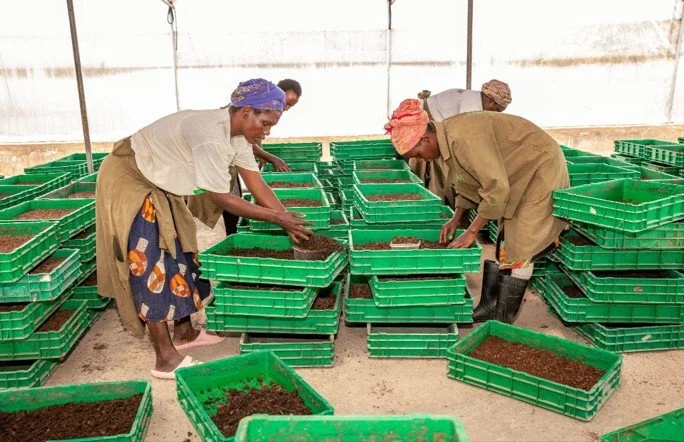
Ecodudu is a waste-to-value company dedicated to addressing waste management, environmental conservation, and unemployment through innovative recycling solutions. By utilising black soldier fly (BSF) larvae, Ecodudu converts organic waste into high-protein animal feed and nutrient-rich organic fertilisers, benefiting small-scale farmers and businesses seeking sustainable alternatives. The company sources waste through large-scale fruit farms, processes this as feed for the BSF, which is then packaged and sold to small and medium-sized holder farmers.
Company name: Uzuri K&Y Limited
Entrepreneur: Kevine Kagirimpundu, Ysolde Shimwe
Climate sector: Sustainable landscapes
Country of operation: Rwanda, Kenya
UZURI K&Y is an African-inspired, eco-friendly shoe brand founded in Rwanda in 2013 by Ysolde Shimwe and Kevine Kagirimpundu. The company recycles used car tyres and converts them into sustainable footwear, which it sells and distributes through its B2B partners in Europe and the USA, as well as via ecommerce, social media, and retail stores in Nairobi and Kigali. To date, the company has recycled over 45000 tyres, equivalent to 10.5 tons of rubber waste and has created direct and indirect jobs for over 100 people. Approximately 90% of the jobs created are going to women and young people.
Company name: Helton Enterprises
Entrepreneur: Hellen Munyasa, Paddy Ssembatya
Climate sector: Sustainable landscapes
Country of operation: Uganda
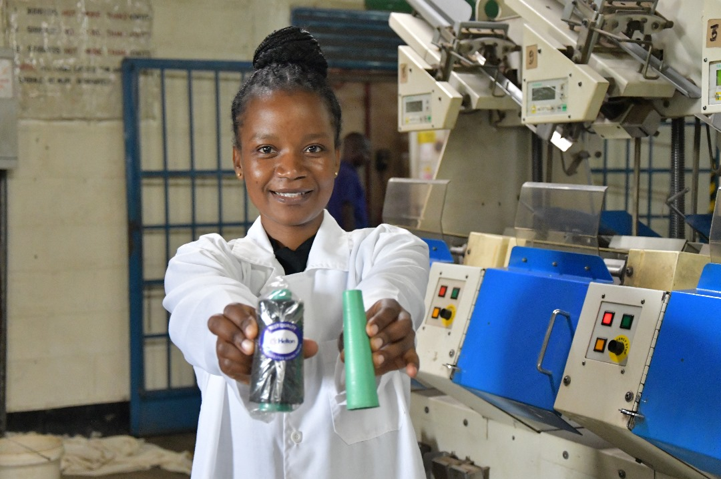
Helton Enterprises is a waste-to-value company that recycles PET plastic waste into polyester thread. The company collaborates with community groups to collect PET waste, which is then brought to its collection centre, washed, and flattened. The company then processes this waste into polyester thread in its processing facility. The thread is sold to textile wholesale companies in Uganda with plans to export to the rest of East Africa.
Impact
Between 2024 to 2025, M-Kyala was able to build a strong pipeline of over 90 businesses in East Africa, invest in the four businesses spotlighted above and provide technical assistance to others.
The Facility was effective for women entrepreneurs, who appreciated both the design and quick turnaround process.
The ability to access working capital to drive growth goals for companies and the reliance on M-Kyala Ventures as a partner to provide additional disbursements, brought their growth strategies closer together.
In addition, including shared services, webinars, and one-on-one advisory support, was effective for both the portfolio companies and pipeline companies as it provided a practical, hands-on approach to how the founders can meet their goals and objectives.
Keeping in touch with the company's progress on a monthly basis and encouraging both financial and impact reporting, provided transparency and a sense of trust with the founders. This allowed M-Kyala Ventures to keep up to date with any changes and adjust projections as needed. 2025 was a particularly challenging year for most of the companies due to domestic economic issues which required working with each founder on new strategies and to provide top-up funding.
Key Takeaways
The work is not complete. Despite this positive effort through the RFF, there is still insufficient funding reaching women entrepreneurs in the climate space. A UN Women report shows that only 3% of climate ODA had gender as a principal focus. More capital needs to reach expert, gender-focused organisations like M-Kyala Ventures to drive increased capacity for women entrepreneurs in the climate space to grow.
Published: 21 Apr 2026