
Putting Women-Led Community Engagement at the Center of Climate Action in Colombia
About
Type of actor
Impact Asset Manager
Deetken Impact/Ilu Women’s Empowerment Fund
Investment type
Debt
Operates from
Latin America & the Caribbean
Sectors
Financial Inclusion, Clean Energy, Affordable Housing, Sustainable Agriculture, and other impact sectors
Managed by Deetken Impact, the Ilu Women’s Empowerment Fund (Ilu Fund) is the first Gender Lens Investment (GLI) vehicle dedicated to Latin America and the Caribbean (LAC). As an evergreen fund, it delivers consistent financial returns while advancing the UN Sustainable Development Goals (SDGs). To date, the Fund has impacted over 700,000 individuals across the region through strategic investments in financial inclusion, clean energy, affordable housing, and sustainable agriculture.
The Ilu Fund leads by example: women comprise two-thirds of management, 80% of the investment committee, and 67% of the total staff. This internal diversity fuels an investment strategy that prioritises gender-smart companies. Backed by 100% private sector capital from over 80 investors, the Fund has built a proven track record of delivering strong, risk-adjusted returns while advancing gender equality with every dollar invested.
Through the Resilient Futures Fund (RFF) managed by 2X Global, the Ilu Fund is deploying a meaningful pool of capital towards climate-resilient and inclusive sustainable development in LAC through a combination of catalytic capital and technical assistance.
With the support of the RFF, Deetken Impact’s Ilu Women’s Empowerment Fund completed a 2X qualified investment in Dispower, a Colombian company that operates off-grid solar systems in remote communities in Colombia's non-interconnected zones.
These zones represent 52% of the country's area and are home to approximately 1.9 million people, of which two-thirds are still without electricity access today. These communities present often inhibitive market barriers including a complete lack of infrastructure to enable access and connectivity, as well as cultural dynamics that often distance indigenous and rural subsistence farming communities from the rest of the country.
With de-risking support from their RFF grant, the Ilu Fund invested in Dispower at a critical juncture in its journey. Against the background of the company already having successfully launched operations in more than 1000 off-grid communities, the investment enabled the company to continue growing operations while the government set up the payment system covering the majority of revenues, and simultaneously refine its business model in preparation for scale.
Approach
Dispower’s solutions bring clean energy to off-grid households, schools, and infrastructure services benefiting over 42,000 individuals today through a public-private initiative led by the government to electrify rural Colombia. By covering the initial investment and installation of the systems and subsidising a part of the monthly cost to end-clients, this programme enables private sector companies such as Dispower to effectively serve the most vulnerable communities.
Climate change and inequality are so rampant that they require trillions of dollars of investment, a systemic shift in sociocultural norms, and unwavering public and private sector engagement. As investors, it is easy to get caught up in the enormity of the issues and the technicalities of how to address them, at the risk of losing sight of a fundamental truth: those most affected by these challenges are not only impacted by them, but are essential to designing and implementing effective solutions - local communities.
Dispower’s approach integrates the local community into every aspect of the company’s operations. The company recognises that the positive acceptance and engagement of the communities themselves is fundamental to the company’s success and the achievement of social and environmental impacts. Community leaders are often the door to the rest of the population, and have the power to either facilitate or bar access to the community.
For example in, La Guajira, a coastal state that is home to the Wayuu peoples, Colombia’s largest indigenous population rich in resilient ancestral tradition, Dispower’s engagement is guided by the recognition that Wayuu societies are largely matriarchal. Against that background, Dispower identifies, engages, and empowers women leaders that have the respect of their communities, from the outset of a new operation.
With the trust of the community leaders, Dispower promotes local employment through hiring, training, and empowering technicians, as well as Social Managers. The Social Manager, a respected member of the community who speaks local indigenous dialects, acts as a bridge between Dispower and the clients. Their responsibilities include understanding the needs and dynamics of each community, facilitating communication, addressing concerns, and training the community in key areas such as proper use of the solar power system and financial management.
Impact
As of the end of 2025, Dispower was serving over 1100 rural communities, encompassing 13,500 households and representing more than 42,000 individuals now accessing off-grid, clean energy.
Within the communities, over 150 schools and more than 120 local organisations were also being served with off-grid energy solutions.
Ilu Fund’s Managing Partner Magali Lamyin and Senior Impact and Gender Officer Rachel Murphy had the opportunity to visit Dispower’s clients in La Guajira. In addition to being home to the Wayuu, Colombia’s largest indigenous population, this region encompasses an expansive arid territory that lacks basic infrastructure such as water, electricity, internet, and cell phone service. Without it, these communities cannot charge devices, connect to the digital world, conserve food in a refrigerator, or perform basic tasks after dark. It is undeniable that electrifying households radically improves quality of life and economic opportunities.
The Ilu Fund team had the opportunity to engage directly with community leaders, the Social Manager, local technicians, and the clients they serve. Their stories are a testament to the need for and potential of community-centered climate solutions to combat climate change and eradicate poverty.
They met Carmen, the leader of the Aluatachon community, whose eyes have been deteriorating from weaving in poor light for decades. Wayuu communities are known for their unique artisan products such as bright colored and patterned bags, one of the biggest handicraft exports in Colombia today. Rooted in their ancestral traditions, weaving and crocheting make up a large part of their daily life, especially for women.
Carmen can now work after dark, bringing the production time for a bag down from 15 to 8 days. Because many of her neighbors still do not have electricity, her home also serves as a community center. It is not uncommon to see children studying under her light at night, friends gathering to watch a telenovela, or neighbors coming by to charge their phones. Instead of walking to a nearby town to charge them, they can now juice up at her home.
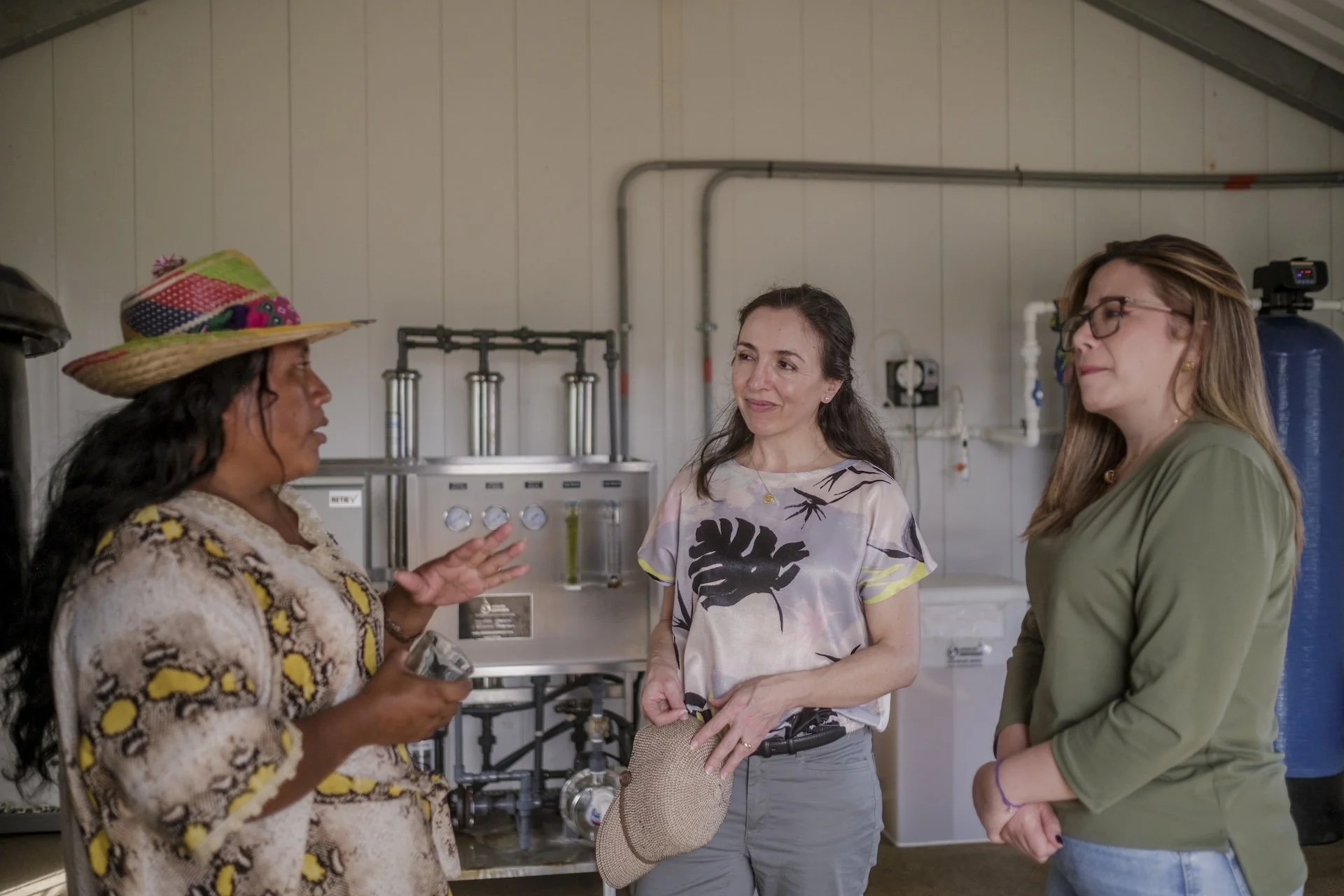
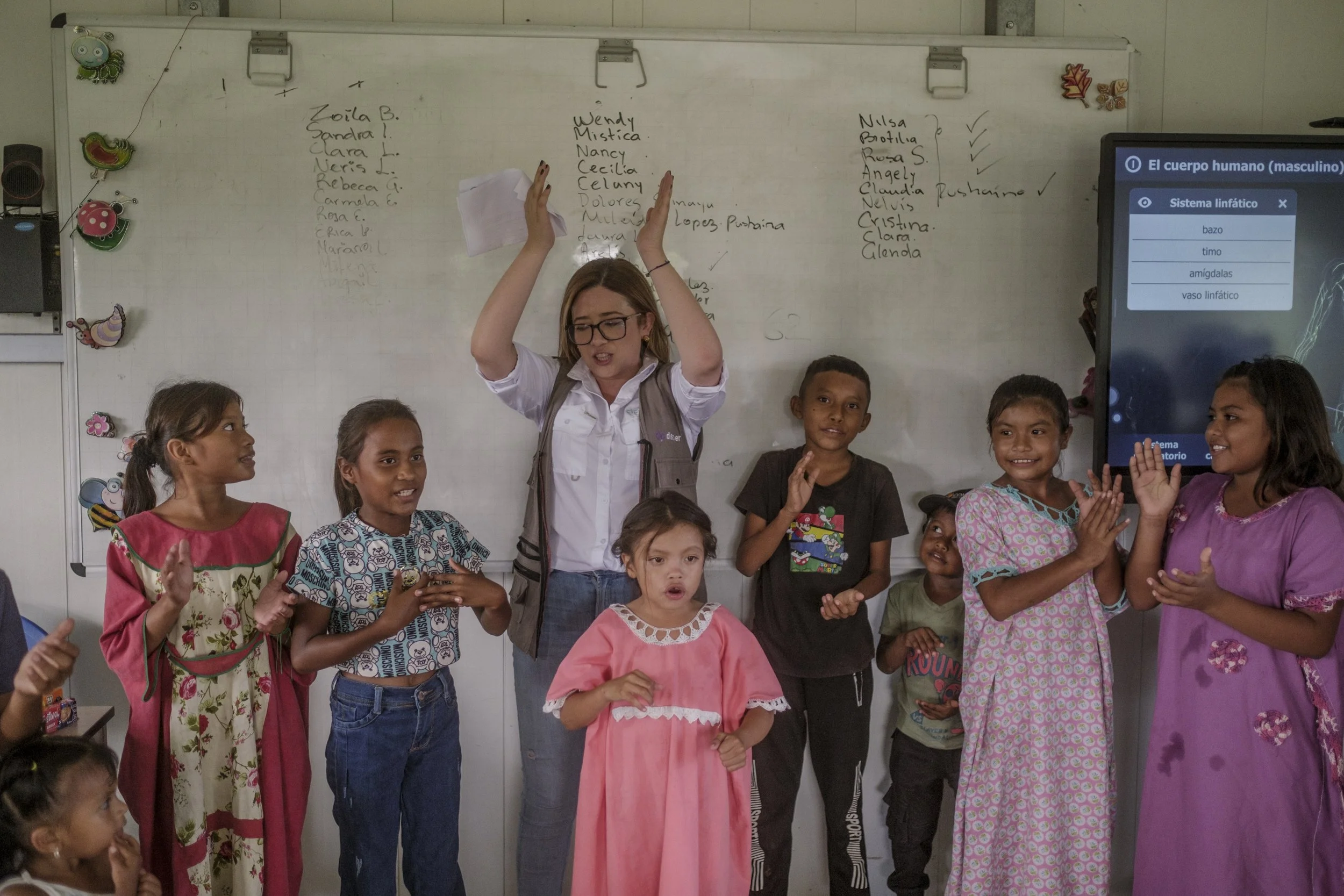
At the Julima community school, electricity brought e-learning solutions to improve education for 64 students. The mothers of students were charging their cell phones while their children were in class and enjoying a break from the heat in the air conditioned room. The team also met Evelyn, a teacher who operates a solar-powered water pump and treatment plant serving 20 families or 180 beneficiaries. Evelyn shared that before the installation of the pump and plant, she and her children used to wake up at 3 a.m. to walk hours to the closest well, only to carry the water home under the morning sun.
Key Takeaways
What is most striking about Dispower’s model is not just the impact of electricity access, but also the role of the communities in ensuring these solutions are effectively adopted. Dispower considers community members not just as beneficiaries but as allies and teachers.
They are the closest to the problems faced by locals and therefore also to the solutions that are needed, and Dispower knows that they cannot effectively operate without incorporating their perspectives and fostering their leadership. Community cooperation deeply rooted in ancestral traditions, means that generosity prevails.
Published: 6 Apr 2026